Hybrid working has moved well beyond being a temporary response to changing circumstances. For many organizations, it is simply how work gets done.
In Great Britain, 28% of working adults hybrid worked between January and March 2025, according to the Office for National Statistics (ONS). Among full-time workers, that increased to 34%. In the United States, 27.9% of paid full days were worked from home in February 2025, according to the Survey of Working Arrangements and Attitudes.
But making hybrid working available and creating an effective hybrid workplace are two very different things. One of the biggest challenges is collaboration.
When employees divide their time between home, the office and other locations, collaboration can no longer depend on everyone being in the same place at the same time. Organizations need to make it easy for people to communicate, plan office days, find colleagues and share ideas wherever they're working.
The workplace matters too. If people are coming into the office to collaborate, they need the right people, spaces and technology waiting for them.
Below we explore what hybrid working is, why collaboration is important and how to create a hybrid workplace where collaboration is seamless.
What is hybrid working?
First things first, what actually is hybrid working? Hybrid working is a flexible working model where employees split their working time between a physical workplace and another location, usually their home.
There isn't one standard hybrid working model. Some organizations set specific office days, some allow teams to choose when they come in, and others give employees greater flexibility based on their role and responsibilities.
In the UK, flexible working is also part of the wider employment landscape. Employees have the legal right to request flexible working from their first day in a job, including changes to where and when they work.
The right hybrid working model depends on your people, workplace and operational requirements. What matters is giving employees clarity while creating an environment where they can work and collaborate effectively.
Why is collaboration important in a hybrid workplace?
Hybrid workplace collaboration is about enabling people to work together effectively when they aren't always working in the same location. That creates a different challenge from traditional office collaboration.
Teams might have some employees in a meeting room and others joining remotely. People may work across different schedules or time zones. Employees might also choose to come into the workplace specifically to collaborate, only to discover that the colleagues they wanted to meet are working elsewhere.
Good hybrid collaboration removes as much of that friction as possible. Organizations need to think about:
- how employees know when colleagues will be in the workplace
- where teams can work together when they are on-site
- how remote employees participate in meetings and decisions
- which communication channels teams should use
- how information is shared between locations
- how employees book collaborative spaces
- how workplace teams understand demand for different spaces
9 ways to improve collaboration in the hybrid workplace
Below are just a few of the ways organizations can improve collaboration between teams as more start embracing flexible and hybrid working.
1. Give people a reason to come into the workplace
The office can play an important role in hybrid collaboration, but simply getting people through the door doesn't guarantee better teamwork. Employees need a reason to be there.
That could be collaborating on a project, running a workshop, meeting customers, onboarding a new colleague or spending focused time with their team.
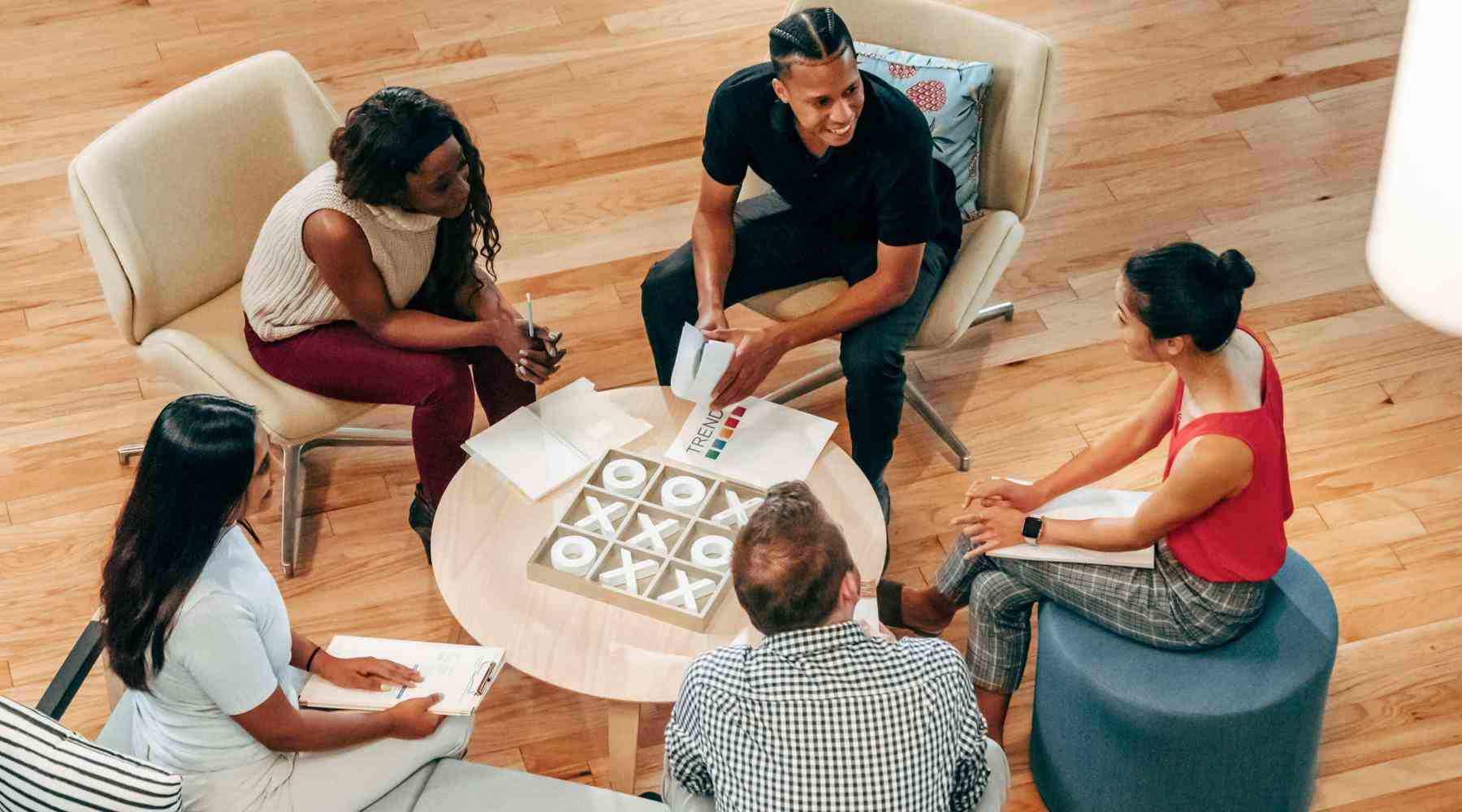
This changes the role of the office. Instead of treating every desk as someone's permanent destination, organizations can create different spaces around different types of work. Collaborative areas can support workshops and team discussions. Meeting rooms give distributed teams somewhere to connect. Quiet spaces make focused work possible.
A hybrid workplace should support what employees are trying to achieve that day. Crucially, employees also need to know who else is going to be there. If someone commutes into the workplace specifically to collaborate with their team and discovers everyone else is at home, the office hasn't delivered much value.
Giving people visibility of who's planning to be on-site can make office time more intentional and make face-to-face collaboration easier to organize.
2. Make hybrid collaboration location-independent
Effective hybrid collaboration shouldn't depend on everyone being in the same room. Teams need clear ways to communicate, share information and make decisions regardless of where individual employees are working.
Technology plays an obvious role, but adding more tools isn't necessarily the answer. Too many disconnected platforms can create more complexity. Instead, establish clear expectations around which channels are used for different types of work.
Instant messaging might work for quick questions. Project management software can provide visibility of ongoing work. Shared documents allow people to contribute asynchronously. Video meetings can support discussions where real-time conversation adds value.
It's equally important to document decisions. An important conversation that only happens between people in the office can quickly leave remote colleagues behind. Shared documents, project updates and clear meeting notes help create a more consistent experience.
3. Coordinate office days around collaboration
One of the biggest practical challenges of hybrid working is unpredictability. How many people are coming in tomorrow? Which teams will be there? Will the colleagues someone wants to work with actually be on-site?
For employees, visibility can make the difference between a productive office day and an unnecessary commute. A hybrid workplace can help teams coordinate their schedules before they arrive. If employees can see when colleagues are planning to work from the office, they can make more informed decisions about when to come in themselves.
Teams might choose certain days for collaborative work while keeping other days flexible. Individuals can coordinate meetings, workshops or project sessions around when the right people will be together. That makes workplace attendance more purposeful and gives face-to-face collaboration a clearer role within hybrid working.
4. Make collaborative spaces easy to find and book
Getting the right people into the office is only half the job. They also need somewhere to work together.
Hybrid workplaces need to support different types of collaboration. A two-person catch-up needs something different from a ten-person workshop. A video meeting with remote colleagues has different requirements from an in-person brainstorming session.
Desk and meeting room booking can help employees find and reserve appropriate spaces before they arrive. That makes office days easier to plan and reduces the time people spend searching for somewhere to work.
It also gives workplace teams useful information about demand. If collaborative areas are consistently full while individual desks sit empty, that's valuable insight. Workplace usage data can help organizations understand what employees actually need from the office and adapt their spaces accordingly.
5. Create better hybrid meetings
Hybrid meetings are one of the most visible tests of hybrid workplace collaboration. When some people are sitting together in a room and others are joining remotely, it's easy for the conversation to become dominated by those who are physically present.
A few simple practices can make hybrid meetings more inclusive:
- make sure remote participants can clearly see and hear the room
- share agendas and relevant documents before the meeting
- avoid relying on conversations or visuals that remote participants can't access
- actively give remote attendees opportunities to contribute
- document decisions and actions afterwards
- consider whether a meeting is actually necessary in the first place
The technology matters, but meeting habits matter just as much. The goal should be to give everyone a meaningful way to participate, wherever they're working.
6. Keep visibility across a changing workforce
Hybrid collaboration also depends on knowing who is around. On any given day, the people on-site could include employees who usually work remotely, colleagues visiting from another office, contractors, customers and other visitors.
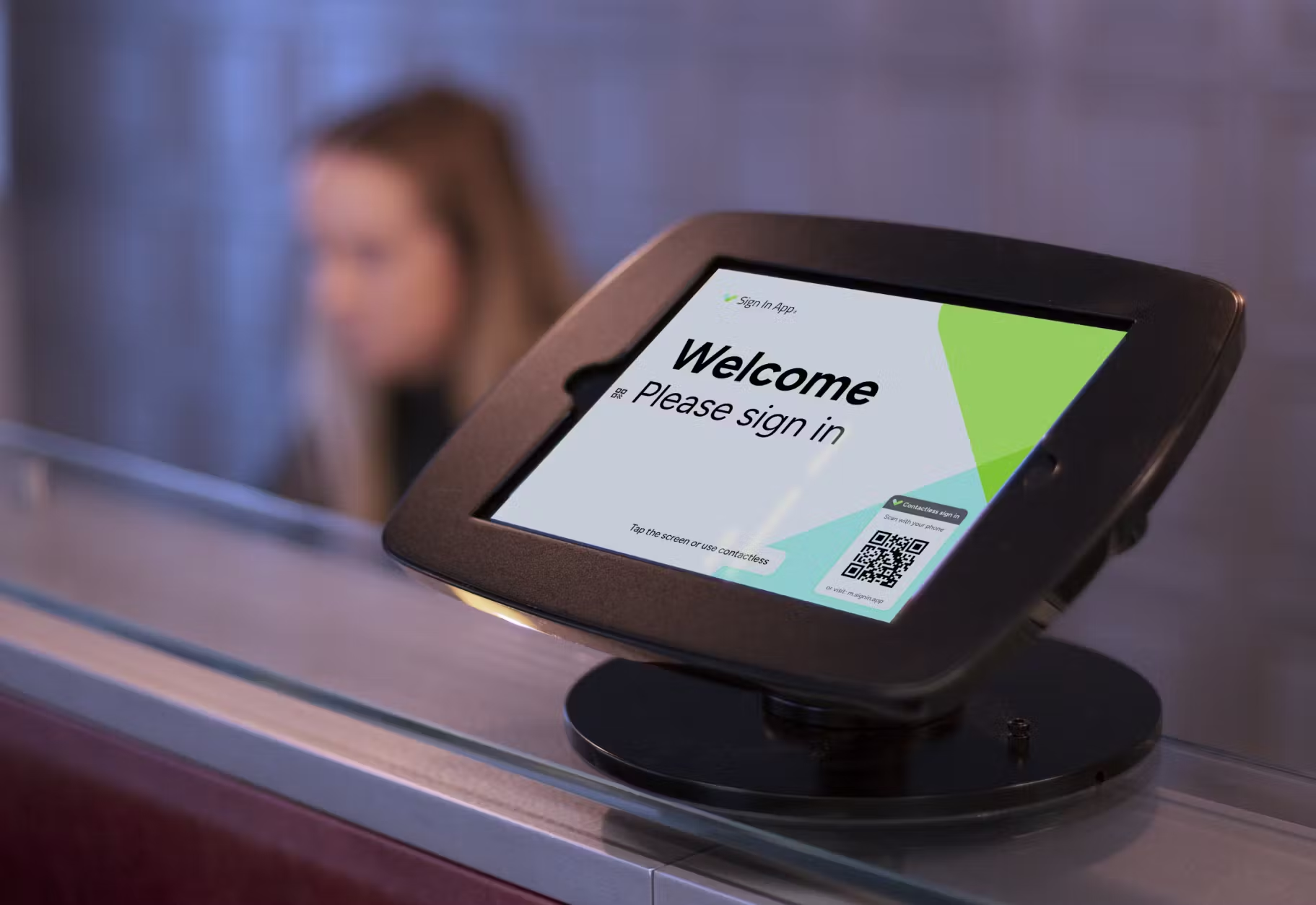
Employee and visitor sign-in can provide a live view of workplace presence without creating unnecessary friction for people arriving. That visibility can help employees understand who's available on-site, give workplace teams a clearer picture of occupancy and help hosts manage visitor arrivals.
It also connects collaboration with a wider operational need: organizations still need to know who is in their workplace. Hybrid working should create flexibility for employees without creating blind spots for the organization.
7. Design safety around the way people actually work
A changing workplace also changes how organizations think about safety. In a fixed workplace, organizations may once have been able to make reasonable assumptions about who would be on-site based on working hours or assigned desks. Hybrid working makes those assumptions less reliable.
The employee roster doesn't necessarily tell you who is in the building right now. Accurate sign-in and presence information can help teams understand who may need to be accounted for during an evacuation or emergency, including employees, visitors and contractors.
This is an important principle for any hybrid workplace: safety processes should reflect how people actually use the building rather than how they were expected to use it.
8. Use workplace data to improve collaboration
Hybrid workplace data can tell organizations more than how many desks are occupied. It can help answer practical questions about how people are using the workplace.
Which days bring teams together? Which meeting rooms are in highest demand? Are collaborative spaces being used more than individual workstations? Are certain areas consistently underused?
Those patterns can help workplace teams make better decisions about layouts, capacity and resources.
The overall goal shouldn't be get more people into the office. Organizations need to understand what people come into the workplace to do and create an environment that helps them do it better.
9. Keep the hybrid workplace experience simple
Hybrid collaboration becomes harder when employees have to navigate too many disconnected processes. If someone has to jump between different systems to find out who's in, reserve a desk, book a meeting room and sign themselves into the workplace, flexibility can quickly turn into friction.
Simplicity matters. Look for opportunities to connect workplace processes and reduce unnecessary steps. The easier it is to coordinate an office day, find colleagues and access the right spaces, the more useful the workplace becomes as a place for collaboration.
The same principle applies to visitors. A changing workplace shouldn't mean a confusing arrival. Customers, contractors and other guests should still know where to go, who they're meeting and what they need to do when they arrive.
How technology supports hybrid workplace collaboration
Technology should make collaboration easier without getting in people's way.
For employees, that could mean seeing when colleagues are coming into the office, planning an office day, reserving a desk or meeting room and signing in without unnecessary admin. For workplace teams, it means greater visibility of who's on-site, how spaces are being used and where demand is changing. For security and safety teams, accurate presence information can support stronger processes and emergency preparedness.
The strongest hybrid workplace technology connects these experiences rather than creating another collection of disconnected tools. Sign In App brings visitor management, employee sign-in, desk and meeting room booking and workplace presence together, helping organizations create workplaces that are easier to use, collaborate in and manage.
Turn every workplace interaction into intelligence
A hybrid workplace creates thousands of signals: who's coming in, where they're working, which spaces they're using, who they're meeting and how workplace patterns are changing. Knowing that something happened is useful. Understanding what it means, and what should happen next, is where Access Intelligence comes in.
Sign In App connects interactions across employees, visitors, contractors and the workplace to give organizations greater visibility, stronger operational insight and the context to make better decisions. So as your workplace becomes more flexible, your understanding of it doesn't have to become more fragmented.
See how Access Intelligence can help you create a smarter, more connected workplace.