
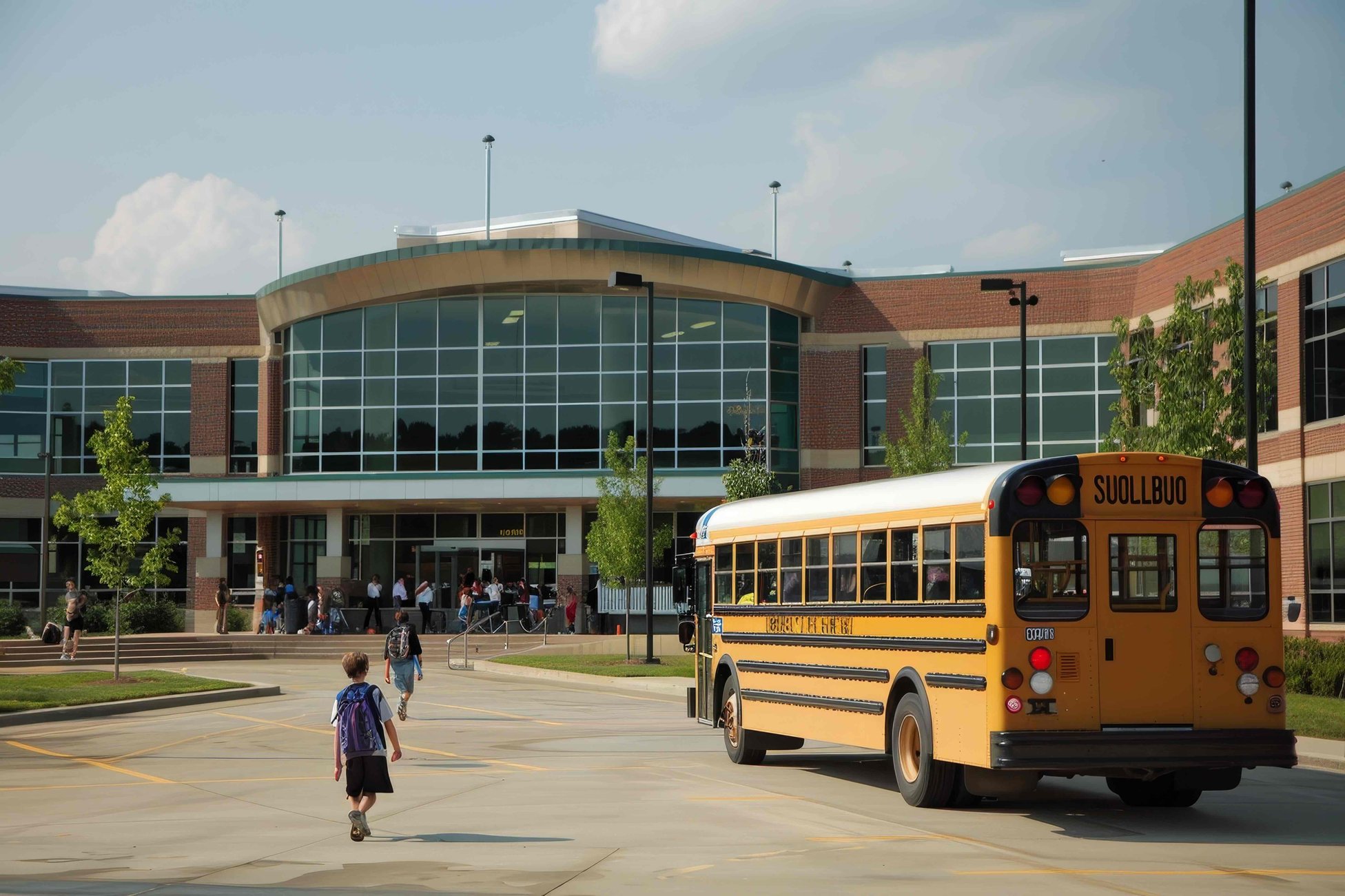
School visitor screening is no longer a routine admin task - it’s becoming a compliance requirement. Across the U.S., new legislation is redefining what proper visitor screening looks like and raising the bar for how schools manage campus access. If your process still relies on paper sign-in sheets or informal check-ins, the gap isn’t theoretical anymore.
School visitor screening is the process of verifying a visitor’s identity, checking them against relevant watchlists, and documenting their entry before they are granted access to a school campus - a process that an increasing number of states are moving to require by law.
Several states—including Virginia and Tennessee—are advancing legislation that strengthens how schools manage visitor access and safety. Requirements now include digital identity verification, sex offender and watchlist checks, and audit-ready visitor logs that stand up to scrutiny. Virginia has already signed legislation into law, tightening expectations around campus access.
The direction is clear. States aren’t waiting for the next incident. They’re building compliance frameworks now. And districts that wait risk scrambling to catch up later.
Understanding what’s driving this momentum is the next step.
Why is there a push for new legislation in US schools?
This wave of legislation isn’t accidental. It’s a direct response to where existing visitor processes fall short.
When processes are put under pressure, gaps can become visible. An unauthorized visitor slips through. A check-in step gets missed. And what once felt “good enough” starts to show its limits.
That’s why states are moving from guidance to enforcement. School safety legislation is accelerating nationwide, and identity verification and background screening are quickly becoming baseline expectations - not optional upgrades.
At the center of this shift is digital identity verification - the process of scanning a government-issued ID and cross-referencing it against sex offender registries and watchlists in real time. It’s something paper logs were never designed to handle.
Not every state is moving at the same speed. Budgets, infrastructure, and policy priorities all play a role. But the direction is consistent. Once you understand why these laws are being introduced, it becomes clearer what compliance will actually require.
And that leads directly to the technology behind it.
Understanding digital identity verification in schools
New legislation is increasingly centered on one core requirement: digital identity verification. Instead of relying on a handwritten name, schools are being asked to scan a government-issued ID and verify it against trusted data sources before granting access.
Digital identity verification is the process of electronically scanning an ID to confirm a visitor’s identity against authoritative databases; replacing handwritten sign-in sheets with structured, searchable data that supports real-time screening and audit-ready recordkeeping.
This naturally changes the role of the front office. Visitor check-in becomes more than a courtesy - it becomes a consistent, repeatable process designed to support safety and compliance.
In practice, that means giving your team tools that can scan an ID, run checks, and log the visit in seconds, without adding complexity to their day.
The real value isn’t just speed, it’s consistency. Every visitor follows the same process. Every entry is documented. Every step is traceable.
And once identity is verified, the next layer can do its job.
The takeaway: digital identity verification isn’t just a technology upgrade - it’s what makes the rest of the process reliable. Without a verified identity, watchlist screening and audit logs have less to stand on.
Watchlist screening: protecting students and staff
Verification is the first step. Screening is where risk is assessed.
Watchlist screening is what turns a verified identity into a meaningful safety check. It’s the step that helps schools understand not just who someone is, but whether there are any known risks associated with allowing them on campus.
Watchlist screening is the automated process of cross-referencing a visitor’s verified identity against sex offender registries, criminal databases, and internal school watchlists at the moment of check-in - flagging potential concerns before access is granted.
This happens in real time. As soon as an ID is scanned, the system checks multiple databases simultaneously.
Across several states, legislation now requires this step before access is granted. That’s a significant shift. Screening is becoming a standard part of the process and one that needs to happen before, not after, entry.
In schools without automated screening, this step can be difficult to apply consistently. Staff may need to rely on familiarity or manual processes, which aren’t designed for real-time checks.
Modern visitor management systems close that gap by making screening automatic and consistent. But not all databases are equal - update frequency and coverage matter, especially when demonstrating compliance.
And that brings us to what happens after the check…
Ensuring compliance and accountability with audit-ready visitor logs
If you can’t prove it happened, it didn’t happen.
That’s the reality behind audit-ready visitor logs. Screening and verification only count if there’s a record that shows exactly what happened, when, and why.
Audit-ready visitor logs are timestamped digital records that capture every detail of a visitor’s check-in - identity verification results, screening outcomes, entry decisions, and host notifications - in a format that can be produced immediately for compliance audits, incident investigations, or legal review.
Legislation is catching up to this reality. It’s no longer enough to check visitors in. You need to prove how you did it.
A paper log can’t confirm whether an ID was scanned or a check was completed. A digital log can.
What audit-ready logs typically capture includes:
- Visitor name, ID type, and verification timestamp
- Watchlist screening results
- Host staff member notified
- Entry granted or denied, with reason
This level of detail matters when something goes wrong or when regulators ask questions.
The challenge isn’t understanding the requirement. It’s making it work at the front desk.
What this actually looks like at the front desk
This is where compliance becomes real.
A visitor check-in system is the technology platform that manages the entire front desk workflow - scanning IDs, running watchlist checks, printing badges, and logging every entry in one automated sequence. It replaces manual sign-in sheets with a structured, verifiable process designed to support compliance.
In practice, the flow is simple: a visitor presents an ID, the system scans it, verifies identity, runs screening checks, and logs the result - all in under a minute.
That simplicity matters. Front office staff are managing phones, students, deliveries, and constant interruptions. The process has to work reliably in real conditions, not just in theory.
When processes rely too heavily on manual steps, consistency can be hard to maintain, especially during busy periods. And that’s where gaps can appear.
Visitor screening expectations are moving in the same direction as other school safety requirements: from recommended to required. And the front desk is where that shift shows up day to day.
The takeaway: compliance isn’t an abstract policy, it’s a daily workflow. It needs to work every morning, under pressure, with real people and competing priorities.
Preparing for compliance with new legislation
Understanding legislation is one thing. Being ready for it is another.
School security legislation is the body of state and federal laws that define how schools manage campus access, screen visitors, and document compliance. Recent legislative sessions across multiple states are expanding these expectations, with clearer requirements around how visitor processes should work in practice.
If your current process relies on paper or manual steps, moving to compliance might seem like a significant shift - but it’s a structured one and it doesn’t have to be complicated.
Start with what you have. Compare your current visitor check-in process to what new legislation requires. Across states, the pattern is consistent: digital identity verification, real-time watchlist screening, and retrievable records.
If any of those are missing, that’s a clear place to begin.
A few practical steps to prioritize:
- Conduct a gap assessment comparing your current workflow against relevant legislation
- Document your existing process to establish a clear baseline
- Pilot digital check-in tools ahead of the school year, rather than during peak periods
- Train front office staff on day-to-day workflows, not just the technology
Starting early makes the transition more manageable and reduces pressure on staff.
Even with the right systems in place, consistency is what makes the difference.
Where many schools face challenges with compliance
Most schools aren’t ignoring compliance, they’re working within processes that were never designed for today’s requirements.
Paper logs, manual checks, and staff-dependent workflows can make it difficult to meet new legislation consistently, especially at scale.
One common challenge is how background checks are handled. A quick ID glance may feel sufficient, but compliant screening increasingly means real-time checks against sex offender registries and watchlists at the point of entry - something that typically requires automation.
Documentation is another area to watch. When records are incomplete or inconsistent, responding to audits becomes more complex. Missing timestamps or fragmented logs can make it harder to demonstrate compliance with confidence.
The pattern is consistent: when processes are disconnected, maintaining consistency becomes harder. Closing those gaps doesn’t require starting over, but it does mean bringing identity verification, screening, and logging into a single, connected workflow.
The bottom line: schools need a process that can verify identity, screen visitors, and produce a complete, retrievable log when needed. That’s quickly becoming the standard, regardless of location.
Key takeaways
As you work through what the 2026 school legislation changes mean for your district, a few core themes are emerging across the states covered in this article:
- Digital identity verification is becoming the baseline. Paper sign-in logs are increasingly being replaced by systems that can verify identity and create structured records that support compliance.
- Watchlist screening is moving to real time. Manual checks against sex offender registries can be difficult to apply consistently - automated screening helps ensure every visitor is checked at the point of entry.
- Audit-ready documentation is gaining importance. States are placing greater emphasis on clear, retrievable records, particularly as compliance becomes more closely tied to funding, liability, and accreditation.
- Preparation windows are tightening. Legislative momentum across 2025–2026 means timelines can move quickly, leaving limited room for procurement and staff training.
Schools that treat compliance as a technology problem alone risk missing the bigger picture. The goal is a safer, more consistent environment for students and staff, and that comes from aligning the right processes with the right tools.
Legislation like Virginia’s recently signed visitor safety measures, alongside similar momentum in other states, points in a clear direction. Whether your state has already acted or not, laying the groundwork now puts your district in a stronger position.
Ready to meet new compliance standards without adding complexity?
Sign In App helps schools verify identity, screen visitors in real time, and maintain audit-ready records - all in one seamless workflow. Book a demo to see how it works.
Sources and references
The legislative landscape around school visitor screening is evolving quickly. The following sources informed the research and examples referenced throughout this article:
- Virginia school safety legislation (official release)
- Virginia school safety legislation (independent coverage)
- Overview of new Virginia school laws affecting safety and operations
- Tennessee school safety initiatives and legislative direction
- National school safety legislation tracker (Navigate360)
For administrators evaluating how to meet these requirements, additional resources on K-12 visitor screening and identity verification can help translate legislation into practical next steps.